
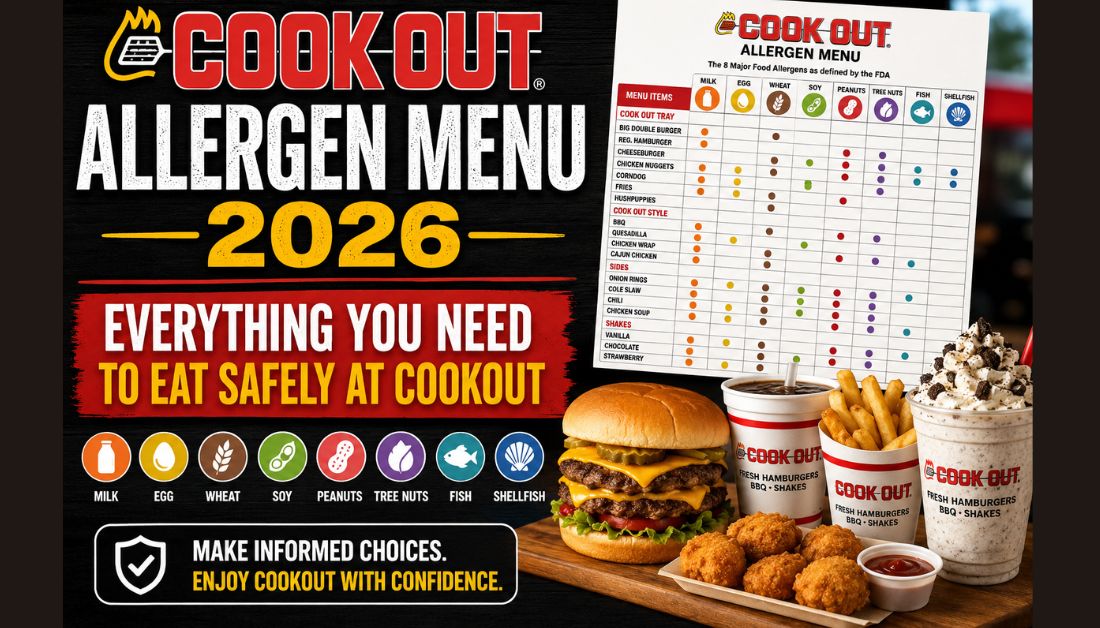
Cookout Allergen Menu 2026 — Everything You Need to Eat Safely at Cookout
If you have food allergies, walking into a fast food restaurant can feel stressful. You’re scanning the menu, wondering what’s safe, what might trigger a reaction, and whether the staff even knows the difference between gluten-free and wheat-free. Cookout is a beloved Southern fast food chain, famous for its char-grilled burgers, massive milkshake menu, and affordable prices. But if you’re managing a peanut allergy, gluten intolerance, dairy sensitivity, or following a vegan diet, you need more than just a regular menu. You need the Cookout allergen menu.
This guide covers everything from cookout gluten free options and dairy-free picks to milkshake ingredients, peanut oil concerns, and cross-contamination risks. By the end, you’ll know exactly what to order, what to skip, and what questions to ask before you take your first bite.
What Is the Cookout Allergen Menu and Why Does It Matter?
The Cookout allergen menu is basically a breakdown of which menu items contain common food allergens like wheat, dairy, eggs, soy, peanuts, and tree nuts. It helps people with food allergies, intolerance, or dietary restrictions figure out what they can safely eat.
Now, Cookout doesn’t publish a fancy, color-coded allergen chart on their official website the way some larger chains do. But based on ingredient information and nutritional data, it’s possible to put together a clear picture of what’s in each item. That’s exactly what this guide does.
Who Needs the Cookout Allergen Menu?
Honestly, more people than you’d think. If you have any of the following, the Cookout allergy menu is your best friend before ordering:
- Celiac disease or gluten sensitivity
- Lactose intolerance or a milk allergy
- Peanut or tree nut allergy
- Egg allergy
- Soy allergy
- A vegan or plant-based diet
- A vegetarian lifestyle
The FDA recognizes nine major food allergens: wheat, milk, eggs, peanuts, soybeans, tree nuts, fish, crustacean shellfish, and sesame. Most of these show up somewhere on Cookout’s menu, so knowing where they hide is really important.
How Cookout Handles Food Allergen Information
Cookout is a regional fast food chain, mostly popular in the Southeast United States. Unlike McDonald’s or Chick-fil-A, they don’t have a detailed online allergen tool you can filter through. This means you have to rely on ingredient knowledge, community-reported information, and conversations with staff at your local Cookout location.
This also means that recipes and preparation methods can vary slightly from one location to another. Make sure you always double-check with your specific Cookout before ordering if you have a serious allergy.
Is Cookout Transparent About Its Allergens?
Cookout is moderately transparent. They do provide basic ingredient information, and their staff are generally willing to help if you ask. But compared to chains like In-N-Out, which offer more detailed allergen breakdowns, Cookout still has room to grow in this area. That said, with the right knowledge going in, you can absolutely eat safely at Cookout.
Complete Cookout Allergen Menu Chart 2026 — All Items, Allergens & Prices
Here’s a full breakdown of the Cookout allergen menu by category. Use this as your quick reference guide before visiting.
Burgers & Patties — Allergen Breakdown
| Item | Allergens | Price |
| Hamburger Patty (No Bun) | Gluten-Free | $1.99–$3.99 |
| Cheeseburger (No Bun) | Dairy, Gluten-Free | $1.99–$4.99 |
| Cookout Style Burger | Wheat, Soy | $1.99–$4.99 |
| Steak Style Burger | Wheat, Soy | $1.99–$4.99 |
| Out West Style Burger | Wheat, Soy | $1.99–$4.99 |
| Char-Grilled Hamburgers | Wheat, Soy | $1.99–$3.99 |
The hamburger patty without a bun is one of the safest gluten-free options at Cookout. Make sure you specify no bun when ordering, and skip the cheese if you’re also avoiding dairy.
Chicken Items — Allergen Breakdown
| Item | Allergens | Price |
| Grilled Chicken Breast | Soy | $3.69–$4.99 |
| Grilled Chicken Sandwich (No Bun) | Gluten-Free | $3.39 |
| Crispy Spicy Chicken Breast | Wheat, Soy | $3.69–$4.99 |
| Chicken Strip Snack | Wheat, Soy | $2.00–$4.99 |
| Chicken Strip Sandwich | Wheat, Soy | $3.39 |
| Chicken Strip Club | Dairy, Wheat, Soy | $3.99 |
| Homemade Style Chicken Strips | Dairy, Wheat, Soy | $2.00–$4.99 |
| Regular Spicy Style | Wheat, Soy | $3.69–$4.99 |
If you’re looking for a lower-allergen chicken option, the grilled chicken breast is your best bet. It only contains soy, making it a solid choice for gluten-free diners. Make sure you order it without the bun or any creamy sauces.
Hot Dogs, BBQ & Sandwiches — Allergen Breakdown
| Item | Allergens | Price |
| Hot Dog | Wheat, Soy | $1.00–$1.99 |
| Cook Out Style Hot Dog | Wheat, Soy | $2.00–$2.99 |
| Bacon Cheddar Dog | Dairy, Wheat, Soy | $2.00–$2.99 |
| BBQ Sandwich | Wheat, Soy | $3.19–$4.99 |
| BBQ Plate | Dairy, Eggs, Wheat, Soy | $3.99–$5.99 |
| BLT Sandwich | Dairy, Wheat, Soy | $1.50–$1.99 |
| Chili Dog | Wheat, Soy | $1.50–$2.39 |
The BBQ Plate is one of the most allergen-heavy items on the menu, containing dairy, eggs, wheat, and soy. If you have multiple food sensitivities, make sure you avoid this one entirely.
Sides & Snacks — Allergen Breakdown
| Item | Allergens | Price |
| French Fries | Possible Cross-Contamination | $1.50–$2.39 |
| Cajun Fries | Soy | $1.85–$2.39 |
| Cheese Fries | Dairy | $2.00–$2.89 |
| Onion Rings | Wheat, Soy | $1.99–$2.69 |
| Hushpuppies | Dairy, Wheat, Soy, Eggs | $1.00–$1.99 |
| Chicken Nuggets | Wheat, Soy | $1.00–$1.99 |
| Corn Dog | Wheat, Eggs, Soy | $1.00–$1.99 |
| Quesadilla | Dairy, Wheat, Soy | $1.00–$1.99 |
| White Cheddar Cheese Bites | Dairy, Wheat, Soy | $2.00–$3.39 |
Wraps — Allergen Breakdown
| Item | Allergens | Price |
| Crispy Chicken Wrap | Wheat, Soy | $1.50–$1.99 |
| Cajun Wrap | Wheat, Soy | $1.50–$1.99 |
| Ranch Wrap | Dairy, Wheat, Soy | $1.50–$1.99 |
| Bacon Ranch Wrap | Dairy, Wheat, Soy | $1.50–$1.99 |
| Cajun Ranch Wrap | Dairy, Wheat, Soy | $1.50–$1.99 |
| Honey Mustard Wrap | Dairy, Wheat, Soy | $1.50–$1.99 |
Every single wrap at Cookout contains wheat and soy. Most also contain dairy. If you’re gluten-free or dairy-free, make sure you skip the wraps entirely.
Milkshakes — Allergen Breakdown
| Item | Allergens | Price |
| Strawberry Milkshake | Dairy | $2.99–$3.99 |
| Chocolate Milkshake | Dairy | $2.99–$3.99 |
| Peanut Butter Milkshake | Dairy, Peanuts | $2.99–$3.99 |
| Banana Nut Milkshake | Dairy, Peanuts, Tree Nuts | $2.99–$3.99 |
| Banana Berry Milkshake | Dairy, Tree Nuts | $2.99–$3.99 |
| Oreo Mint Milkshake | Dairy, Soy | $2.99–$3.99 |
| M&M Milkshake | Dairy, Soy | $2.99–$3.99 |
| Reese’s Cup Milkshake | Dairy, Peanuts | $2.99–$3.99 |
| Walnut Milkshake | Dairy, Tree Nuts | $2.99–$3.99 |
| Eggnog Milkshake | Dairy, Eggs | $2.99–$3.99 |
| Peanut Butter Fudge Milkshake | Dairy, Peanuts | $2.99–$3.99 |
| Caramel Milkshake | Dairy | $2.99–$3.99 |
| Peach Cobbler Milkshake | Dairy | $2.99–$3.99 |
Every milkshake at Cookout contains dairy. Several contain peanuts, tree nuts, or eggs. Make sure you check the specific flavor before ordering if you have any of these allergies.
Drinks & Desserts — Allergen Breakdown
| Item | Allergens | Price |
| Fresh Brewed Tea | None | $1.00–$2.39 |
| Coca-Cola Beverages | None | $1.39–$2.39 |
| Cheerwine | None | $1.39–$2.39 |
| Dasani Bottled Water | None | $1.69–$2.39 |
| Cheesecake | Dairy, Eggs | $1.99–$2.39 |
Drinks are your safest bet at Cookout if you have multiple allergies. Fresh brewed tea, Cheerwine, Coca-Cola products, and Dasani water are all free from the major FDA-recognized allergens.
Cookout Gluten-Free Menu — What’s Actually Safe to Eat?
Gluten-free eating at Cookout is possible, but you need to go in with realistic expectations. The menu isn’t designed around gluten-free dining, so your options are limited. That said, there are some genuinely safe choices if you know where to look.
Are Cookout Fries Gluten-Free? The Honest Answer
This is probably the most asked question about the Cookout allergen menu. Here’s the real answer: the fries themselves don’t contain gluten as an ingredient. Potatoes, oil, and salt — that’s pretty much it. But here’s the problem. They’re cooked in shared fryers alongside items that do contain wheat, like chicken strips, onion rings, and corn dogs.
This means there’s a real risk of cross-contamination. For someone with mild gluten sensitivity, Cookout fries might be fine. But if you have celiac disease, the shared fryer makes them a risky choice. Make sure you think about your personal sensitivity level before ordering.
Gluten-Free Proteins at Cookout
The safest gluten-free proteins at Cookout are:
- Hamburger patty without a bun — just the char-grilled patty, nothing else
- Grilled chicken breast — contains soy but no wheat
- Grilled chicken sandwich without the bun — order it plain and skip any creamy sauces
These are your foundation items for a gluten-free Cookout meal. Make sure you clearly tell the staff no bun when ordering, because even brief contact with a wheat bun can cause a reaction for highly sensitive individuals.
Gluten-Free Sides You Can Trust at Cookout
The coleslaw is generally considered a safer gluten-free side at Cookout. Beverages like fresh brewed tea, Cheerwine, and bottled water are also completely gluten-free. Make sure you avoid the hushpuppies, onion rings, and chicken nuggets — all of these contain wheat.
Are Cookout Milkshakes Gluten-Free?
Some milkshake base flavors may be naturally gluten-free, like the plain strawberry or chocolate. But many popular flavors include mix-ins like Oreo cookies, Butterfinger pieces, or Heath Toffee crumbles — all of which contain wheat. Cross-contamination in the milkshake prep area is also a real concern. Make sure you ask staff about specific flavors if you want to try a shake.
Hidden Gluten Risks You Might Miss at Cookout
Gluten hides in places you wouldn’t expect at Cookout. The BBQ sauce can contain wheat-based thickeners. Specialty sauces and ranch dressings may include gluten-containing ingredients. Even some seasoning blends used on Cajun fries contain soy sauce, which traditionally has wheat in it. Make sure you ask about every sauce and seasoning before adding them to your meal.
Cookout Dairy-Free Options — A Real-World Guide
Finding dairy-free food at Cookout takes a little effort, but it’s definitely doable. The key is knowing which items naturally skip the milk and cheese, and which ones look innocent but are secretly loaded with dairy.
What Dairy-Free Proteins Can You Order at Cookout?
Your best dairy-free protein options are:
- Hamburger patty without bun or cheese — char-grilled and dairy-free
- Grilled chicken breast — no dairy, just watch the soy
- Hot dog without cheese toppings — make sure you skip the Bacon Cheddar Dog version
- BBQ sandwich without cheese — the base sandwich can work dairy-free if you remove cheese and check the sauce
Make sure you specifically ask for no cheese and no creamy sauces when ordering any of these items.
Does Cookout Have Dairy-Free Milkshakes?
Unfortunately, no. Every single milkshake on the Cookout menu is made with a dairy base. There are currently no almond milk, oat milk, or coconut milk alternatives available. If you’re managing a milk allergy or following a strict dairy-free diet, make sure you skip the milkshakes entirely and stick to beverages like fresh brewed tea, Cheerwine, or bottled water.
Menu Items People With Dairy Allergies Should Avoid
Make sure you stay away from these items if you’re dairy-free:
- All milkshakes
- Quesadillas
- Bacon Cheddar Dog
- Chicken Strip Club
- BBQ Plate
- BLT Sandwich
- Ranch Wrap, Bacon Ranch Wrap, Cajun Ranch Wrap
- White Cheddar Cheese Bites
- Hushpuppies
- Cheesecake
Cookout Vegan Options — What Can Plant-Based Eaters Actually Order?
Let’s be real — Cookout is a burger and milkshake joint. It’s not built for vegans. But if you find yourself at a Cookout and need something plant-based, there are a few things you can work with.
Are Cookout Fries Vegan?
The fries don’t contain any animal-derived ingredients in the recipe itself. No dairy, no eggs, no meat-based flavoring. So technically, yes, Cookout fries are vegan by ingredients. But the shared fryer issue comes back again. If you’re strictly vegan and also concerned about cross-contact with animal products from other fried items, make sure you ask about the frying practices at your specific location.
Are Cookout Hush Puppies Vegan?
No, they are not. Cookout hush puppies contain both milk and eggs, making them unsuitable for vegan diners. This is a common question, and the answer is a clear no.
Best Vegan-Friendly Picks at Cookout
If you’re vegan, here’s what you can reasonably order:
- French fries (with shared fryer awareness)
- Cajun fries (check seasoning ingredients)
- Coleslaw without mayo
- Side salad without cheese or dressing
- Fresh brewed tea
- Cheerwine
- Coca-Cola beverages
- Dasani bottled water
It’s a short list, but these items give you something to work with while everyone else enjoys their burgers.
Cookout Milkshakes & Allergen Concerns — What’s Really Inside?
Cookout’s milkshake menu is legendary. With over 40 flavors available, it’s one of the most impressive shake menus in fast food. But for allergy sufferers, those same 40 flavors can feel like a minefield.
Do Cookout Milkshakes Have Eggs?
Yes, some do. The Eggnog Milkshake is the most obvious example, but egg-based ingredients can appear in other flavors too depending on the mix-ins used. Make sure you ask specifically about egg content if this is a concern for you.
Which Cookout Milkshakes Contain Peanuts or Tree Nuts?
If you have a peanut allergy or tree nut allergy, make sure you avoid these shakes:
- Peanut Butter Milkshake — Dairy, Peanuts
- Peanut Butter Cup Milkshake — Dairy, Peanuts
- Peanut Butter Fudge Milkshake — Dairy, Peanuts
- Reese’s Cup Milkshake — Dairy, Peanuts
- Butterfinger Milkshake — Dairy, Peanuts
- Banana Nut Milkshake — Dairy, Peanuts, Tree Nuts
- Walnut Milkshake — Dairy, Tree Nuts
- Banana Berry Milkshake — Dairy, Tree Nuts
- Banana Split Milkshake — Dairy, Tree Nuts
Even if you order a shake that doesn’t list peanuts as an ingredient, cross-contact from blenders and equipment used for peanut-containing flavors is a real risk. Make sure you communicate your nut allergy clearly to staff before ordering any milkshake.
Cookout Peanut Allergy Guide — Oils, Risks & Safe Choices
Does Cookout Use Peanut Oil?
No. Cookout does not use peanut oil for frying. They primarily use vegetable oil or soybean oil blends, depending on the location. This is actually good news for people with peanut allergies, since peanut oil is a common concern at fast food restaurants.
What Oil Does Cookout Actually Use for Frying?
Most Cookout locations use a soybean oil blend or general vegetable oil for their fryers. If you have a soy allergy, make sure you ask about the specific oil used at your location, since it can vary slightly.
Cross-Contact Risk for Peanut Allergy Sufferers
Even though Cookout doesn’t cook with peanut oil, peanuts are absolutely present on the menu in the form of milkshakes. Peanut butter, Reese’s cups, Butterfinger pieces — these all come into contact with equipment in the kitchen. If you have a severe peanut allergy, make sure you inform staff before ordering anything, especially milkshakes or items prepared near the shake station.
Complete List of Major Allergens Found at Cookout
Based on the Cookout allergen information available, here are all the major FDA-recognized allergens present across the menu:
Wheat/Gluten — Found in buns, wraps, breaded chicken, hot dogs, corn dogs, hushpuppies, onion rings, and many sauces.
Soy — One of the most widespread allergens at Cookout. Present in almost every savory item including burgers, chicken, hot dogs, and fries seasoning.
Dairy/Milk — Found in all milkshakes, cheese-based items, ranch sauces, quesadillas, and several sandwiches.
Eggs — Present in the BBQ plate, corn dogs, hushpuppies, cheesecake, and the eggnog milkshake.
Peanuts — Found in multiple milkshake flavors including the Peanut Butter, Reese’s Cup, and Butterfinger shakes.
Tree Nuts — Present in walnut, banana nut, banana berry, and banana split milkshakes.
Fish, Shellfish & Sesame — Not commonly listed across the standard Cookout menu, but sesame may appear at some locations. Make sure you ask if these are specific concerns for you.
Cross-Contamination at Cookout — The Risk Nobody Talks About
This is the section most allergen guides skip, but it’s honestly one of the most important things to understand about eating at Cookout with food allergies.
Shared Fryers — The Biggest Cross-Contamination Threat
Cookout uses shared fryers for multiple items. This means the same oil that cooks gluten-free french fries also cooks wheat-containing chicken strips, onion rings, and corn dogs. For someone with celiac disease or a severe wheat allergy, this is a serious concern. The fries may not have gluten in their recipe, but they can absolutely pick up gluten particles from shared frying oil.
Shared Equipment & Prep Surfaces
Milkshake blenders, prep surfaces, and serving utensils are all shared across different menu items. This creates opportunities for allergen cross-contact even when the item you ordered doesn’t technically contain that allergen. Make sure you ask staff if equipment can be cleaned before preparing your order.
What Cookout Staff Can and Can’t Do
Cookout staff can and should use fresh gloves when handling allergy-sensitive orders. They can make an effort to use clean utensils and prep surfaces. But they cannot guarantee a fully allergen-free environment. Cookout is a fast food restaurant with a high-volume kitchen, and complete allergen isolation is not realistic in that setting. Make sure you weigh this reality against your personal sensitivity level before ordering.
Cookout vs In-N-Out Allergen Menu — Which Chain Is Safer for Allergy Sufferers?
Both Cookout and In-N-Out are popular regional chains with passionate fan bases. But when it comes to allergen transparency, there are some clear differences.
In-N-Out provides a more detailed, publicly available allergen menu on their website. You can clearly see which items contain each allergen without needing to ask staff. Their menu is also simpler, which means fewer hidden allergen risks overall.
Cookout, on the other hand, has a much larger and more complex menu. With over 40 milkshake flavors, dozens of burger styles, and a wide range of sides, there are more opportunities for allergen exposure. Their allergen information isn’t as cleanly published online, which means you need to do more research in advance or ask more questions in store.
For strict allergen safety, In-N-Out edges ahead due to clearer labeling. But for sheer variety and the ability to find something safe with a little effort, Cookout holds its own — especially for gluten-free protein options.
How to Recognize a Food Allergic Reaction After Eating at Cookout
Even with the best preparation, sometimes reactions still happen. Knowing what to look for can make a real difference.
Early Symptoms of a Food Allergic Reaction
Common early signs include itching or tingling in the mouth, hives or skin redness, mild swelling of the lips, and an upset stomach. These symptoms can appear within minutes of eating a trigger food.
Severe Allergic Reaction Signs You Should Never Ignore
More serious symptoms include throat swelling, difficulty breathing or wheezing, a sudden drop in blood pressure, dizziness, loss of consciousness, and severe vomiting. These are signs of anaphylaxis, which is a life-threatening emergency.
What to Do Immediately
If you or someone with you shows signs of a severe allergic reaction after eating at Cookout, use an epinephrine auto-injector (EpiPen) if available and call emergency services immediately. Do not wait to see if symptoms improve on their own.
Practical Tips for Eating Allergy-Safe at Cookout
Here’s a simple, real-world guide to making your Cookout visit as safe as possible:
- Tell staff about your allergy upfront. Don’t wait until you’re already at the counter with a line behind you. Walk in, make eye contact, and clearly explain your allergy before you even look at the menu.
- Ask for fresh gloves. Staff should be willing to put on a clean pair of gloves before handling your order. Make sure you ask for this directly.
- Keep your order simple. The more customized and complex your order, the more chances there are for something to go wrong. Stick to grilled proteins, simple condiments like ketchup and mustard, and safe beverages.
- Bring an allergy card. A small card listing your specific allergens that you hand to the cashier or manager makes communication easier and more accurate, especially during busy periods.
- Skip the shared fryer items if you have celiac disease or a severe gluten allergy. This means skipping the fries, onion rings, and any breaded items.
- Check condiments. Ketchup, mustard, and plain mayo are generally safe. Specialty sauces like ranch, honey mustard, and BBQ sauce may contain hidden allergens. Make sure you ask before adding any sauce to your meal.
- Use the cookout allergen menu as a starting point, not a guarantee. Menus change, recipes get updated, and preparation methods vary by location. The Cookout allergen menu is a guide, not a legal guarantee of safety.
Frequently Asked Questions About the Cookout Allergen Menu
Are Cookout fries gluten-free?
The fries don’t contain gluten ingredients, but they’re cooked in shared fryers with wheat-containing items. They’re risky for celiac disease sufferers due to cross-contamination.
Does Cookout use peanut oil?
No. Cookout uses vegetable oil or soybean oil blends, not peanut oil. However, peanuts are present in several milkshake flavors, so cross-contact risk still exists.
Are Cookout milkshakes gluten-free?
Some base flavors may be gluten-free, but many mix-ins contain wheat. Cross-contamination in the shake prep area is also possible. Make sure you ask about your specific flavor.
Does Cookout have dairy-free milkshakes?
No. All Cookout milkshakes are made with a dairy base. There are no plant-based milk alternatives currently available.
Do Cookout milkshakes have eggs?
Some do, particularly the Eggnog Milkshake. Other flavors may also contain egg-based ingredients depending on the mix-ins. Make sure you ask staff about your specific flavor choice.
Are Cookout hush puppies vegan?
No. Hush puppies contain both milk and eggs, making them unsuitable for vegan diners.
What is gluten-free at Cookout?
The safest gluten-free options are the hamburger patty without a bun, grilled chicken breast, and simple beverages. Make sure you avoid anything breaded or served in a bun.
What oil does Cookout use?
Most locations use a soybean or vegetable oil blend for frying.
Does Cookout offer nut-free options?
Most of the savory menu is nut-free. Make sure you avoid the peanut butter, walnut, banana nut, and other nut-based milkshake flavors.
Is Cookout safe for people with celiac disease?
Cookout can be challenging for celiac diners due to shared fryers and widespread wheat use. Make sure you stick to grilled proteins and non-fried items, and always speak with staff before ordering.
Final Thoughts Using the Cookout Allergen Menu to Eat With Confidence
Eating at Cookout with food allergies isn’t impossible. It just takes a little preparation. The Cookout allergen menu gives you a solid foundation to work from. You know which items contain wheat, dairy, eggs, peanuts, soy, and tree nuts. You understand the cross-contamination risks from shared fryers and equipment. And you know which items are your safest bets.
The most important thing? Don’t be shy about asking questions. Make sure you tell your server about your allergy every single time you visit. Make sure you double-check sauces and toppings. Make sure your order is simple enough that there’s less room for error.
Cookout is a great restaurant with genuinely delicious food. With the right knowledge and a few smart choices, you can enjoy it safely, no matter what dietary restrictions you’re working around.